Episode 149
Listen to this episode on


Episode Transcript
Speaker 1 00:02
This is CyberSound, your simplified and fundamentals-focused source for all things cybersecurity.
Jason Pufahl 00:11
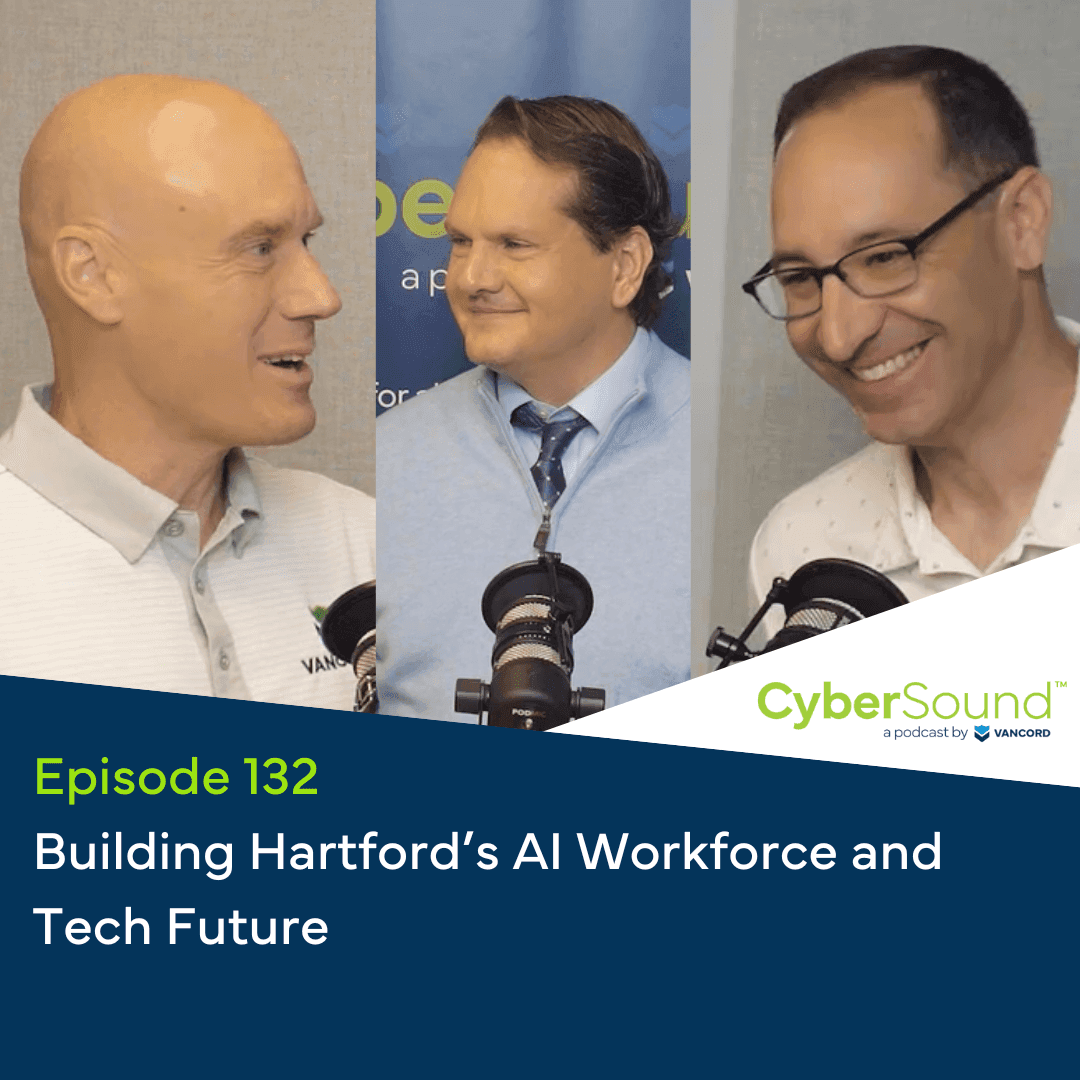
Welcome to CyberSound. I’m your host, Jason Pufahl, joined again today by Jeff Auker, the Director of Development Services for the City of Hartford.
Jeff, I appreciate you coming back.
Jeff Auker 00:22
Thanks for having me.
Jason Pufahl 0:24
Good conversations.
Jeff Auker 00:25
I’m glad. I’m glad I enjoyed it last time. Let’s see what we can get into this time around.
Jason Pufahl 00:33
Honestly, for me, a big part of the podcast is its educative nature and bringing people together who can provide some insight a little bit into ma…
Speaker 1 00:02
This is CyberSound, your simplified and fundamentals-focused source for all things cybersecurity.
Jason Pufahl 00:11
Welcome to CyberSound. I’m your host, Jason Pufahl, joined again today by Jeff Auker, the Director of Development Services for the City of Hartford.
Jeff, I appreciate you coming back.
Jeff Auker 00:22
Thanks for having me.
Jason Pufahl 0:24
Good conversations.
Jeff Auker 00:25
I’m glad. I’m glad I enjoyed it last time. Let’s see what we can get into this time around.
Jason Pufahl 00:33
Honestly, for me, a big part of the podcast is its educative nature and bringing people together who can provide some insight a little bit into maybe a specific topic, or in this case, going on in Connecticut, in the City of Hartford, in particular. But in fairness to the podcast, I do have to try to find that segue into, hey, technology, security, AI, etc. The last time we spoke, we chatted for quite a while about really Hartford’s efforts to start developing a workforce that can compete in the age of AI, can address some of the likelihood of some of the jobs disappearing, and how we actually re-educate, re-tool folks. I know you put a lot of effort into that. I think that’s the foundation of where I want to spend our time today. But maybe if you could give a minute of your background for those people who maybe didn’t listen to the first podcast, and then we’ll go from there.
Jeff Auker 01:33
Sure. Everybody, Jeff Auker, as he said, I run development services in the City of Hartford. That’s a rather prosaic title, but it covers pretty much anything to do with building.
Economic development, small business development, community development, planning, zoning, blight, licensing, inspections, that all comes through here. On top of that, we’ve been really driving the mayor’s agenda around AI technology and workforce. This is my first gig in the public sector. I’m two years into it now. I came from Emphasis, where I was running the Hartford Innovation Center. We built up about 1,000 jobs there twice, once before COVID, and then I’d do it again after COVID. Got some real-world experience building the tech workforce here in Connecticut. Before that, I was with PwC in Hartford back in the day. I had some talks with Arunan, and he’s a persuasive guy and got me in on the agenda here.
Jason Pufahl 02:31
If you could then, last year, I think, felt like maybe the beginnings of the conversation relative to Hartford’s… Maybe repositioning isn’t exactly the right word, but starting to rethink the impact that AI will have on jobs. You’ve had a year now to start building up the idea of Hartford as an AI hub, and I think supporting some of the big insurance players and some of the big businesses in Hartford. Spend a minute, if you would, on where you sit today relative to roughly 12 months ago.
Jeff Auker 03:08
Yeah. It’s been a whirlwind. The technology has been changing far more rapidly than I think… Well, obviously, than anything has before, and faster than I think anybody reasonably expected to it. But to ground it in what the mission was, the mayor before I joined said he had two things he wanted from AI. One, he wanted to figure out how AI could help us govern better and provide better services to the residents, the businesses, everybody here in the city.
And secondly, and this I think was the most important piece, was how do we ensure that our residents and our businesses are prepared for this next round of technology? And the workforce piece came in incredibly importantly, because if you look back on it, Hartford was able to weather better than some cities, just the collapse of manufacturing back in the 60s and 70s, as that was the way you got into the middle class. That was your entry-level job.
You’d go down to the factory, down the street, get a job, work your way up. When that went away, we had the benefit of the insurance companies around here, which provided some great entry-level jobs in the contact centers and claims and all that. Well, now as those are starting to be impacted by AI, the mayor wanted to make sure that we had the capabilities to train our workforce and provide access and opportunity in an urban area that we’ve missed the last few digital cycles. So that was the mission. And we started really looking hard at what are the fundamental conditions that Hartford lacks? What’s going to be different this time around? And what the learnings that I had from working at Emphasis and working in the school systems around here on a couple boards was that the talent is there and the desire is there. It needed some nurturing. It needed some guidance. It needed some facilities. And so we really started focusing in on how do we figure out the right partners with schools, understand what the residents want, the small businesses want, and what the big corporations want. And it really focused in on workforce.
I’m not going to go to travelers or Hartford Healthcare or the Hartford and tell them what AI means. They’re so far ahead of anything that we’d be doing here in the city. That’s not what we’re…We may have over-rotated a little bit at the beginning. How can we help? What can Hartford do to help you with? And that came across as, how can we make you better at AI? And we got some people doing some amazing things here in the city. And what it really always came back to from all…The residents wanted opportunities to learn, improve their businesses, and maybe get a career path. The big corporations said, hey, look, we’ll get the data scientists. We’ll get the frontier folks. We got to compete for them, but we need a workforce around here that knows how to use AI with good judgment in their personal and their work lives, just because that’s how it’s going to be going. And then the small and medium-sized businesses were very much like, how do we get access to some of these tools and these capabilities? So it really focused us less on content and programs and more on how do we create the utilities in the city that will basically support this development of the workforce. And we’ve had some great successes.
We can get into some details there, but we opened up about 67,000 square feet here on Constitution Plaza. It’s the old Trinity Liberal Arts Activation Lab. We’re partnering with them. And that’s our pirate ship. That’s where we’re starting. We’ve been having training sessions. QuantumCT is now taking office hours up here in Hartford a couple of days a week. It’s just a place where we can have a place to assemble, attract people, talk about these things, and then we can get into the bigger capital ask with the state, which is still ongoing, but that’s a bit of a different drive. But we feel good. We feel good about the attention we’ve been able to gather and the partners we’ve been able to assemble.
Jason Pufahl 07:19
So you mentioned a couple of interesting things here. QuantumCT, I’m sure they’re jumping in because they’re trying to figure out how do we utilize AI. Less of a job change, but more of an opportunity to leverage AI to potentially advance their research relative to Quantum. So I think we’ll set that aside as an idea for a minute. I’m curious, and maybe this is just your opinion, maybe this is a broader discussion. Do you see AI replacing jobs? Do you see AI creating jobs? That has to come up pretty routinely in what we’re doing, right? And how concerned are companies around potential replacement of jobs, or how concerned are people even around the replacement of jobs?
Jeff Auker 08:08
I mean, the concern is everywhere. I mean, AI as a brand is not doing very well right now in the press, and some of the people leading it have put us there. But in terms of the impact on jobs, Jeff’s opinion, mildly well-informed, I think the elimination of jobs and the layoffs caused by AI have been overstated. I think the impact on just the dearth of entry-level jobs has been understated. So it’s not that jobs that exist now are going away at some unexpected or crazy rate. Where I’m most concerned is now businesses are getting rid of that bottom layer, that entry level, because the middle management and the managers can use AI to do some of those tasks that are more process-driven, but that’s how you learn. So that’s really what concerns me. And the evidence is strong, and as we were talking before this, I’ve got five kids all in their early 20s. So I see how that’s impacting them. And it’s just the job market is a very different job market for the entry-level folks.
Jason Pufahl 09:23
And I think some of the conversations we’ve had, and honestly, I think in a way, you and I, we might get some of the time value of AI out of for a short period of time, because I think not everybody’s using it necessarily. There’s an opportunity to increase your production and get some of that benefit. But I think what we’re really seeing is the expectations for production have increased to the point where people say, I know you can turn this around in 30 minutes, where it used to take maybe four hours. So I expect more out of you, and I expect you to be using AI. I think it’s shifting to your point really quickly to where now people need the tools. And frankly, if you don’t have access to the tools, you’re at a disadvantage. And if you haven’t started to really learn prompt engineering and just some of the basics around how to get repeatable and effective output from them, you’re going to fall by the wayside. And I would imagine, I don’t want to speak for you, but I would imagine that’s part of the underpinning of what you’re trying to train in.
Jeff Auker 10:25
Absolutely. And here’s just a reality that the kids have to navigate right now. AI in schools, whether it be K-12 or Higher Ed, basically is, if you use it, you’re shamed. Do this on your own. You’re not going to get the value of it. AI is bad in the educational environment. But day one on your first job, they’re expecting these students to be AI natives. And suddenly, how do you use it in your job? But I was cheating yesterday if I used it. And today I’m fired if I don’t. And we haven’t figured that out. The schools don’t know what to do. And they get that. But what do you do?
Jason Pufahl 11:08
Yeah. And I think the good news, I think, is four years ago, that’s all it was, was plagiarism and cheating. Without a doubt now, because I also do a fair work with folks in higher ed. The conversations in the language is much more, it is a tool. You should use it. It can’t be the output. It can’t be your intellectual property. But if you need to write a snippet of code to facilitate something, use AI to do it because it’s a tool and you should use it. And I think now you’re starting to get that groundswell and that recognition of don’t ignore it. Don’t bury your head in the sand, take advantage of it. But you just can’t put a prompt in and then submit it as your work. Absolutely.
Jeff Auker 11:57
And this is where I think the value of actual real world experience, hands-on project work, mentorship, public speaking, the ability to take whatever code you wrote and explain it, to choose which code to write when the cost of shipping is basically zero. You ship anything. Now you have to decide what to ship. And then on the broader side, if you used AI to give you background or come up with refined arguments, get up there and defend it. Get up there and defend it in front of other folks. And I see pedagogy going a little more that way, which I think could make us all smarter down the right.
Jason Pufahl 12:42
So maybe segue a little bit. Can we talk a little specifically about some of the programs that you have in place, maybe some of the partners that you actually have in place with the idea of maybe upskilling versus reskilling or trying to replace jobs like that. Somebody who’s interested in learning about AI to take it to the workforce. How do they engage you? How do they kind of go through a curriculum, if maybe that’s the best way to think about it? What is that process look like?
Jeff Auker 13:16
So all work in progress right now, but we do have some interesting pilots that have gone on. So I’ll go with the architecture and then some examples. The core partner in all of this is the Connecticut AI Alliance, which started as four or five schools that were going to be really the backbone, the academic backbone of what we’re doing here, including UConn, some of the other local schools. And then we had some folks like University of New Haven step up and say, hey, they’re interested in what we’re doing. And eventually this grew into all 19 higher education organizations in the state. The first state that has an actual alliance focused on AI and the passage of SB5, the longstanding debated bill for the last three years, provided some key funding for CAIA and some key direction that they’re going to be the centerpiece for the state.
There’s this collection of schools for high-performance computing, for all the high-volume networks we need to do. So really the things that would take scale, they’re going to be that academic partner for the state. And that includes UConn and a lot of other folks as well.
So that’s a great move. And so that’s a core partner. And what the architecture that we’ve set up with them that will expand to other areas. First, the problem statement, you take somebody like, we heard this from Travelers Hartford, lots of folks. They love the idea of hands-on training. They love the idea, especially in tech of internships, use cases relevant to their business done on their tech stack. But the typical process would be you’d have a manager, a hiring manager, have to go school by school, department by department, professor by professor, and figure out who’s got students in that are working on something like that. By the time you go through all that, semester’s over and you move on. So think of what CAIA is putting together here. They’re calling it the, it’s a capstone connection piece. It’s really creating a marketplace. So any employer can come to us and can say, here is the technology I’m interested in. Here are the skill levels I’m looking for. And here’s the technology stack I’m looking to do. What schools have in higher ed, have students that could participate in this? And how do we triage the use case into a way that will match the skill sets? And so you’re basically just creating a marketplace where you can exchange the demand for labor from the people actually hiring to the supply in higher ed with the skills that are coming in and you get the feedback loop.
Jason Pufahl 16:00
And that is great feedback to higher ed because they get some clarity on, are they actually now bringing students forward who can have jobs right when they come out?
Jeff Auker 16:10
And the case in point, so Trinity College, one of our great partners in all of this, they jumped into it last summer and they got 13 students. They said, we’re going to do a senior project with you. And basically it was Daniel Brewer and the entrepreneurship folks over there said, well, it’s going to be AI and helping it develop in Hartford and helping you figure it out. And so we had this group of students that were working with different corporations, doing use cases, doing projects. There was a big one they did for the Connecticut Children’s Medical Center. And suddenly these guys were getting job offers, internships, and just the connections were there. And this was all as we were figuring it out. So that was Trinity kind of jumping in, taking a leap of faith and doing it. And you see the connection. And what that’s really spawned now is that center I was telling you about up at 10 Constitution Plaza, I point out because I’m at the bottom of Constitution Plaza. We’re having meetups two, three times a week, the Connecticut AI Alliance, women in AI groups. We’ve had startups already spin out of that. I mean, small ones, but the people are meeting. We do a session that’s supposed to go from five to seven and you’ve got people still there at eight, 30, nine o’clock on whiteboards. So that’s creating the intake mechanism here. And so that’s the core of what we want to do. And then there’s parts that will support that from both a financial standpoint and more of a seeding the ground to get people interested.
Jason Pufahl 17:43
The universities, you were able to get all the universities to participate in this, huh?
Jeff Auker 17:50
Yeah. And so I want to be clear on who did it. So the Connecticut Council of Independent Colleges, I always get it. But Jen Widness really started that coalition. And Vahid Behzadan, the professor from the University of New Haven, who’s cyber and AI. He may, if I haven’t connected you with him, I should.
He can get into the geekiness all you want there. They really took the lead where Jen worked the relationships and the you work in higher education, you know, getting schools to agree on a path forward is pretty tough. So an amazing job there, anchoring of that. And then just the sheer competence and expertise of Vahid out there talking to the other professors, talking to the department heads about what we’re trying to do, brought that together. So they were the ones that took this from an idea to help, you know, goofy idea in Hartford to really being the centerpiece. Now, you know, something that’s written into law of, you know, the Connecticut’s approach to high-performance computing, networking, and AI. So it’s pretty cool. And that’s all Jen and Vahid.
Jason Pufahl 19:04
So yeah, Connecticut’s approach. So I know that we talked a little bit about the 10 Windsor Street. I think it’s 10 Windsor Street?
Jeff Auker 19:13
- 150.
Jason Pufahl 19:15
See, I don’t know my address well enough. Roof building, one that you are actively remediating, right? I think you and I chatted a little bit about the, you know, maybe the public’s idea that it would be a data center, but you know, the impracticality of that. So I’d love to spend a second there. And then, you know, maybe a little bit of a segue of what do you envision that space potentially becoming ultimately?
Jeff Auker 19:40
Yeah, that’s an important question here. So for those that just decided, if you’ve been to a Yard Goats game and you look out over center field, there’s a really ugly, old, brutalist, gray piece of cement that was built in the late 60s, early 70s to be a data processing center. It’s basically a check cashing center, check clearance center.
It’s been fallow for going on 20-something years, horribly blighted, dangerous stuff going on inside. So another benefit of this work, you know, kind of like Tang coming out of the NASA program was it really focused us on that particular lot and got the state and others to come together. It’s going to be, it’s about an $11 million project, I think, to take that building down. There’s floors of water underneath it. It just needs to go away from a, you know, from a day job point of view. So that’s coming down and that’s a huge win for the city, no matter what goes there.
The intent of what we want to do, so we’re still working with the state on the $100 million innovation cluster fund that they had offered up a couple of years back. Half of that has gone to New Haven, as expected. They did a great job with the bioscience application there. And we’ve been going back and forth with the state on exactly the technologies and the industries that we would be serving here as we bring all this programmatic work that we were just talking about together to give it a place. You know, we’re just working through some of the final details and honestly, I hope we can maybe have an emergency cut in before you go to press on this one.
Jason Pufahl 21:16
Okay. That’d be great. We can do that. Yeah.
Jeff Auker 21:19
So we’re feeling really encouraged by it, but you know, we have something that is there that’s been called a data center for decades, right? Not a data center in any modern sense, but the words matter. When we originally put this thing together, we were calling it the, I don’t know, the Hartford Applied AI Center. Because you’ve been in tech, you get techies together to try and name something. You just lost a week of productivity. Sounds good when you’re done.
Jason Pufahl 21:46
Yeah.
Jeff Auker 21:47
Oh, we had some bad, bad ideas. So it just kind of stayed prosaically, you know, Hartford Applied AI Center. We never thought about data center for a variety of reasons to get into. But then honestly, data centers over the last 18 months have become one of the legitimately scariest environmental social issues out here. I mean, you got, you know, people want to put something twice the size of Manhattan in Utah.
You got Elon Musk with something like 39 methane processors to run the Colossus down in Memphis. So there’s people doing things with data centers and AI, all the words that we’re using, that are horrible for the environment and would never, just not something we’d support. So we’re in that. And so we need, it’s on us to explain what it is that’s not that. I’m just the sheer practicality of it though. You know, it’s billions to build a data center. And you don’t build data centers where you have high costs of electricity and we have the highest cost, I believe, of electricity in the lower 48. Can’t do it. The site we’re looking at would never be big enough. But the point behind it is it’s never, this has always been a place where the compute would be done elsewhere. We’d use the cloud to access what we need to, you know, we’re not going to be training LLMs in AI. That’s where you need a huge iron, those dark centers that do all the bad stuff. This legitimately is going to be like a building you’d see with Accenture, PWC, similar to what we have at Emphasis. High-tech, yes, but no more high-tech than, you know, a modern office building doing tech work. We do plan to bring Makerspace CT over in there.
So there’ll be some big industrial stuff there, but they’re already in the bottom of G-Fox. And that’s not, that’s CNC machines and lathes and 3D printers. It’s not server-heavy. So, you know, those data centers of, you know, racks and racks of thousands of servers that are dark and air-conditioned, that’s nothing like what we’re building. But hopefully what we’re doing, we have, we can respond very clearly in the next week or two from what we decide, how the final pieces of this with the state, we’ll be able to be very clear about what’s going to be there. And, but it’s not a data center, but that’s on us. It’s in the messaging and how it’s housed there.
Jason Pufahl 24:13
Yeah. And, you know, you, you mentioned already the push and pull between, you know, the benefits of AI, but then AI also, you know, being its own worst marketing engine and all of these negative things, you know, but it’s, it’s, it’s environmental impact, potential impact on jobs. Like there’s a lot of things that people take away that are negative about it. And, and I speak to young people pretty regularly who simply say, I don’t use it because, you know, morally, I think, you know, the, the, the environmental, the climate impact is too great. And I don’t want to be a part of that. So I don’t envision that changing dramatically here. You still need compute to make all of this stuff work. But I suspect there’s going to be a variety of people who are happy that Parfor is not trying to build some big AI data center, you know, downtown.
Jeff Auker 24:57
Oh, me, me too. Me too. And then hold us to that. We’re, we’re, we’re, we’re good with that.
Jason Pufahl 25:02
Yeah. It’s just impractical. So it sounds like, if I recall, you, you’re doing a bunch of that work on that building now with the idea of actually coming down probably sometime in the summer.
Jeff Auker 25:12
Yeah. So it’s, it’s so dirty on the inside and it’s this weird complex building. I mean, there’s like nine contractors involved, all specialized in very specific things. Blowing up the building wasn’t an option. There’s too much in it that you could not just have a puff of dust. So they’ve been working now for several months on the inside, stripping it down to what will probably be like six, eight inches of wall, but all stripped out from the inside and carted out. So anything, any of the contaminants on the inside will be stripped down. And then the plan is the day after the last home game this season, we’ll have a little bit of a boom. We might be able to do some, you know, a ceremonial boom in a few weeks. I’m part of it, but yeah, this, this one’s complicated and we’re being very careful because you’re doing it in an urban area. It’s a dirty building and it takes expertise. So yeah, no, no, no dramatic wrecking ball or C4.
Jason Pufahl 26:05
Yeah. You know that they, I know the yard goats every year, they do your fireworks at a variety of times. I think the last game they might, you could always time it with that, make it a little more.
Jeff Auker 26:14
I see Chompers & Chew Chew with you know, the Acme Roadrunner plunger.
Jason Pufahl 26:21
That’s the way to go.
Jeff Auker 26:22
We’ll see what we can pull off.
Jason Pufahl 26:23
Uh, so, you know, kind of, kind of trying to wrap this up a little bit. Uh, and frankly, I hope that we can, you know, sort of speak annually, at least about this, but you, what, what does say three years look like for you? You know, what, what does success in three years sort of manifest itself as?
Jeff Auker 26:42
Yeah. I mean the, I think the, the two leading indicators would be, um, you know, our, our big corporations around here are, are hiring a lot more locally and they’re expanding locally. They’re not looking to other markets.
Um, you know, like Atlanta or Austin or something else to put satellite offices in to get talent, right? They’re going, this is a great way for me to get talent. And then the other side of it would be you have residents and, you know, of the city and the region going, this is where I go as we’re figuring out how to teach AI versus how to use it in, in the bill, you know, in, in your job, we can have these co-curricular, we can have these extracurricular, these hands-on pieces that extend not just to higher ed, but to adult learners. People have been displaced by AI through different programs to the state. Um, they’re going, this is where I go. And, you know, that, that’s really, I mean, both sides of that market working well, you know, ideally we’ve got that building up. Um, you’ve got an entry level, which is open to the public. Um, we’ve been talking about an idea, which is basically an AI genius bar where residents can come in and say, you know, here’s my phone. What do I do with this? Um, you can make an appointment for a restaurant, you know, just say, Hey, how do I fix my ordering, my scheduling, my food choices, things like that. You know, we’ll just spend an hour the same way where you walk into a genius bar, you go, I bought this thing, you know, help me make it go. But if, if we don’t have that street level connection, we failed. And if we don’t have the big corporations and universities going, ah, this, this really helped us connect, we failed. And hopefully we’ve got some bells and whistles around that too.
Jason Pufahl 28:31
Yeah. And you know, I, I applaud you for putting the amount of effort and time into it that you have it, it, to say AI took people by surprise, maybe a little bit of overstatement, but I think the, you, the amount of change that has resulted in the growth of AI, uh, I do think a lot of people by surprise and the ability for AI, especially agentic to do some of the call center work, which I know it’s prevalent in Hartford and, you know, some of those lower, lower entry level type jobs. I mean, it’s important to be thinking about what’s the impact of those folks. How do you actually start, you know, making sure that they are, uh, you know, able to be employed at, you know, at, at their current or a better level going forward.
So I, I mean, I wish you all the luck as you move forward with this.
Jeff Auker 29:16
I appreciate it. I appreciate the support and the, the chance to talk about it. Um, yeah, I mean, the mayor’s the mayor’s behind this. He’s been speaking very, um, passionately about this. This is not a cycle of, in the job market that we can miss. And, you know, you talked about the uncertainty and how things are going. Um, it’s not going to go away. Right. So let’s, as the mayor has been saying, let’s take the lead here at Hartford. Let’s not wait for the federal government. Some of the questionable ideas coming out of there on AI or the CEOs who were clearly motivated by some other, you know, um, monetary and financial decisions that, you know, may not be consistent with what we’re talking about here to run a good city. Um, let’s, let’s bring this stuff in. Get it out on the table, let’s learn it. Let’s figure out how it works for Hartford and, you know, partner in, and we can be the model for the state and hopefully the region and other municipalities moving forward.
Jason Pufahl 30:07
Yeah.
Jeff Auker 30:08
That’s the goal.
Jason Pufahl 30:09
Up with it. And honestly, that’s part of it. Just try to keep up with it.
Jeff Auker 30:12
Yeah, I know. We’re in it. And I mean, every week, you know, another demise drops something else or, you know, and you’re like, what, what, what can we do now? This is awesome.
Jason Pufahl 30:20
Yeah. I mean, it’s, it is amazing how quickly, and then, and then something that worked, you know, a week ago, all of a sudden it says, I don’t, I don’t do that anymore. Yeah. Wow. How come? Right.
Jeff Auker 30:30
But yeah, I’ve, I’ve been, I’ve been fighting with Claude on that a little bit. And yeah, Gemini evolve. We were using Gemini here in the city. Um, which has been a great tool. Uh, but, but, you know, right now it’s, it’s just for, for desktop productivity. We haven’t created any big apps or anything like that, but, you know, you know, our own dog food, use our own systems and our own, um, yeah. Project work here to, to, to improve how we do business.
Jason Pufahl 30:55
Well, Hey, on that note, uh, we’ll, we’ll certainly touch base in 12 months. Uh, if there’s, if there’s big news in the interim, you know, reach out. I’m happy to have you on.
Jeff Auker 31:02
I will. You’ll hear.
Jason Pufahl 31:03
That’s cool. Uh, so as always, it’s a pleasure to have you on. Uh, I appreciate it. I always say this, if anybody has any questions about what’s going on in Hartford, I’m happy to try to make an introduction to Jeff, but he’s clearly visible on LinkedIn and the city website. So you can find them on your own as well, but happy to chat.
Jeff Auker 31:21
As always, Jason. Thank you.
Speaker 1 31:23
We’d love to hear your feedback. Feel free to get in touch at Vancord on LinkedIn, and remember, stay vigilant, stay resilient. This has been CyberSound.