



Every business leader knows cybersecurity matters. But knowing it matters and knowing what to do about it are two very different things. Most leaders are not short on information. They are short on clarity. The decisions feel big, the options are confusing, and the cost of getting it wrong is real. This guide breaks down the cybersecurity decisions leaders struggle with most and shows how to approach them with confidence.
Why Cybersecurity Decisions Feel So Difficult Today
Cybersecurity is no longer just a technical issue. It touches operations, compliance, finances, and even reputation.
Leaders are expected to make decisions that reduce risk, protect data, and support growth. At the same time, threats keep evolving and requirements keep changing.
According to the IBM Cost of a Data Breach Report 2025, the global average cost of a breach reached $4.4 million.
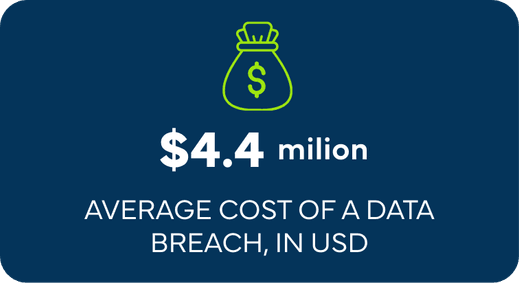
Source: IBM Cost of a Data Breach Report 2025
That number alone explains why these decisions feel heavy. But the real challenge is not fear. It is uncertainty about what actually works.
How Much Should We Actually Be Spending on Cybersecurity?
This is usually the first question leaders ask.
The honest answer is that there is no fixed number. What matters is understanding your current state before deciding on a budget.
Many organizations do not have a clear picture of their security posture. They are unsure what systems are protected, where the gaps are, or what risks matter most.
The smarter path is not to ask “how much” first. It is to ask “what do we have and what do we need?” That starts with a cybersecurity risk assessment, which gives leadership a clear and honest look at where things stand today. From there, budget decisions have actual data behind them rather than gut feelings.
This approach aligns closely with how Vancord supports organizations through its risk assessment and advisory services, helping businesses understand where to focus before investing in tools or solutions.
Who Is Actually Responsible for Security Around Here?
This is the decision that quietly causes the most damage. When security belongs to everyone, it often ends up belonging to no one.
In smaller organizations, this usually happens because there is no dedicated security leader. In larger ones, even a CISO may not have enough support to manage everything effectively.
This is where many organizations explore a Virtual Information Security Office model. Instead of relying on one person, they gain access to a team that provides ongoing leadership, guidance, and accountability.
The goal is simple: security needs an owner. Whether that is internal or through an outside partner, the decision about who is responsible has to be made on purpose, not left to chance.
Compliance vs Security: Are We Actually Protected?
Many leaders focus heavily on compliance. It feels like a clear goal. Pass the audit and move forward.
But compliance alone does not equal security.
Frameworks like NIST and CMMC provide structure, but they are meant to guide continuous improvement. The National Institute of Standards and Technology emphasizes that cybersecurity should be an ongoing process, not a one-time effort.
The problem is that many organizations treat compliance as a checklist. They meet requirements but still leave real risks unaddressed.
A stronger approach is to use compliance as a foundation while building a security program that adapts over time. This is often reflected in how organizations approach governance, policy development, and ongoing monitoring within Vancord’s compliance and advisory services.
Build vs Outsource: What Is the Right Security Model?
Another common decision is whether to build an internal security team or work with an external partner.
Both options have value, but they serve different needs.
| Approach | In-House Security | Outsourced Security (vISO, SOC, MDR) |
|---|---|---|
| Control | Full internal control | Shared responsibility |
| Cost | High hiring and training costs | Predictable monthly cost |
| Expertise | Limited to internal hires | Access to broader expertise |
| Speed | Slower to build | Faster to implement |
| Scalability | Harder to scale | Scales with business needs |
Many organizations today choose a hybrid approach. They keep internal IT resources but rely on external expertise for advanced capabilities like monitoring, incident response, and strategic guidance.
This is where services like Security Operations Center support and managed detection and response naturally fit into the bigger picture.
What Happens If There Is a Cyber Incident?
Most leaders assume they will figure it out when the time comes.
That rarely works.
An incident response plan that has never been tested is not a plan. It is a document. When a real event happens, decisions need to be immediate and clear.
Who shuts down systems? Who communicates with customers? Who handles legal or insurance requirements?
These are not decisions you want to make under pressure.
Organizations that take cybersecurity seriously often run tabletop exercises to simulate real scenarios. These exercises uncover gaps early and build confidence across teams.
In one real-world case, a school district that worked with Vancord ran one of these exercises and discovered weak credentials that could have been exploited in a real attack. The alerts fired correctly, risks were fixed within days, and nothing was disrupted during normal operations. The result was not just a report. It was confidence.
The Mistake Most Leaders Make: Waiting
Security rarely feels urgent until it is. That is the trap. Threats do not announce themselves. Attackers are patient. And by the time something looks obviously wrong, a lot of damage has often already been done.
The leaders who handle cybersecurity well are not the ones with the biggest budgets. They are the ones who made deliberate decisions early. They know what they have, who is responsible for protecting it, and what happens if something goes sideways. They did not wait for a breach to find out where the gaps were.
If you have been putting off a real security conversation because it feels complicated, that is the exact reason to start now, not later. Our managed security services are built for organizations that want protection that does not require them to become security experts to use it.
A Simpler Way to Approach Cybersecurity Decisions
Most decisions become easier when you focus on three things.
First, understand your risks.
Second, define who is responsible.
Third, build a plan that can evolve over time.
When those pieces are in place, everything else becomes more manageable.
FAQ: Cybersecurity Decisions for Business Leaders
How do I know if we need a cybersecurity risk assessment?
If you do not have a clear view of your risks, systems, and data exposure, a risk assessment is the right starting point.
What is the difference between a vISO and a traditional CISO?
A vISO provides access to a team of experts, while a traditional CISO is a single full-time role. The team approach often brings more flexibility and broader expertise.
Is compliance enough to stay secure?
No. Compliance helps, but it does not cover all real-world risks. Security needs to go beyond checklists.
How often should cybersecurity strategy be reviewed?
At least once a year, or whenever there are major changes in your business or systems.
Ready to Stop Guessing?
Cybersecurity decisions are not easy, but they do not have to feel overwhelming.
When you stop guessing and start working from clear information, those decisions become much easier to manage. You do not need perfect answers. You need the right direction and a plan that actually reduces risk over time.
If you are ready to have an honest conversation about where your organization stands, reach out to the Vancord team. We will start with what you actually need, not what sounds impressive on a slide deck.
And if you are still exploring what the right security model looks like for your organization, our breakdown of what an MSSP actually does is a good place to start.
No pressure. Just practical guidance that fits your business.