



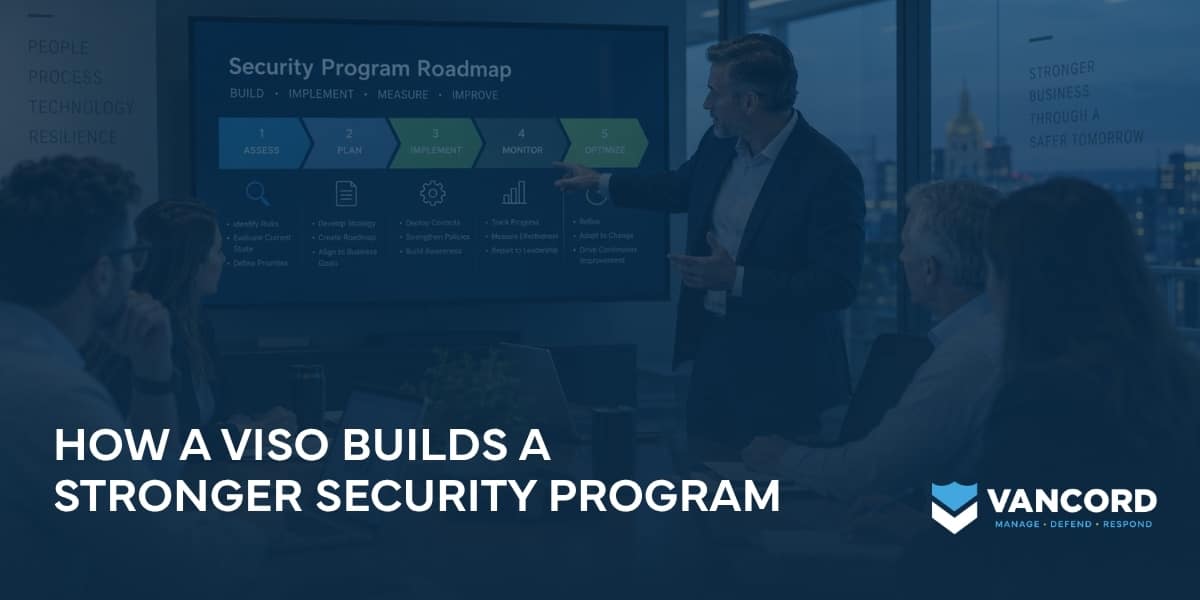
Many companies know they need stronger cybersecurity, but hiring a full-time Chief Information Security Officer isn’t always practical. A Virtual Information Security Office, or vISO, provides experienced security leadership without the cost of a full-time executive. A vISO helps organizations in building a sustainable security program that aligns with business goals, manages risk, and supports long-term growth.
The Value of vISO
A Virtual Information Security Office, or vISO, gives organizations access to experienced security leadership without the cost of a full-time Chief Information Security Officer. Acting as an extension of your team, a vISO helps identify risk, prioritize security initiatives, and build a robust cybersecurity program that aligns with your business goals.
Many organizations make the mistake of focusing primarily on technological improvements when developing their security program. They invest in the latest network security and monitoring tools before answering the more fundamental questions:
- What are our company’s biggest risks?
- Which systems are most critical?
- Who owns cybersecurity decisions?Ho
- w do we measure progress?
A vISO provides the necessary strategy and guidance that technology alone can’t offer, and builds a security program that grows with your business.
vISO vs. Fractional CISO
A fractional CISO typically provides strategic guidance to an organization as an individual consultant and is usually best suited for short-term consulting. But as businesses grow and their needs become more complex, having consistent support is imperative. A vISO provides strategic leadership that takes an organization’s long-term goals and needs into account, and consists of a team of specialists in compliance, engineering, incident response, and governance.
This team-based approach is central to Vancord’s vISO & vDPO Security Leadership model.
Does Your Business Need a vISO?
You may benefit from a vISO if:
- Security initiatives are stalling
- Security projects keep getting delayed
- Compliance requirements are multiplying
- Customer questionnaires are becoming more complex
- Your organization’s biggest risks aren’t identified
- Your IT team is stretched too thin.
These situations are becoming more common across multiple industries, including financial services, manufacturing, healthcare, and education.
In manufacturing, organizations often face increasing pressure around supply chain security and contract-driven requirements like DoD Cybersecurity Compliance. In healthcare, protecting sensitive patient data through strong HIPAA Compliance & Patient Data Security is both a legal and operational requirement. Educational institutions continue to deal with rising threats while managing strict expectations around FERPA & CIPA Compliance for student and staff information.
The Mature Security Model
A mature security program combines governance, risk management, technical controls, monitoring, incident response, training, compliance, and executive reporting into a coordinated effort. While security tools provide visibility, governance determines how effectively an organization responds.
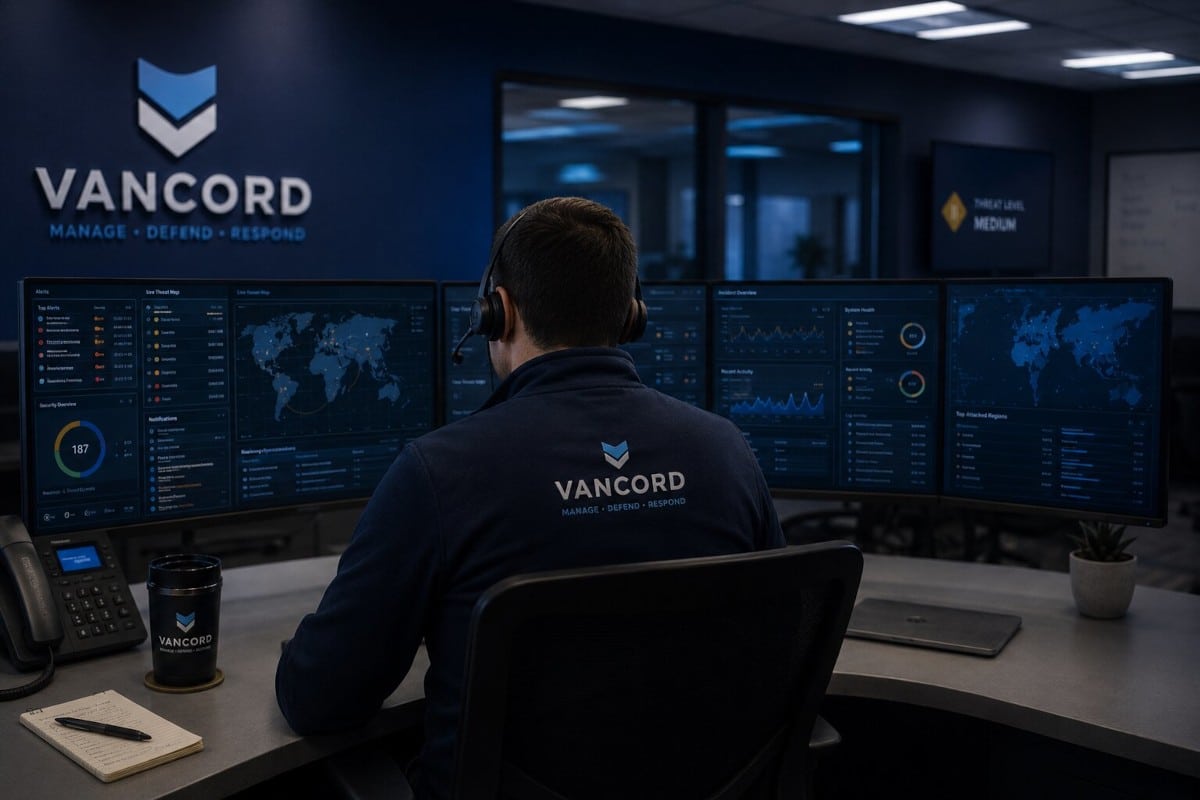
For example, monitoring tools like Managed Detection & Response (MDR) provide visibility into threats, but without governance, organizations often struggle to turn alerts into action.
Turning Risk Into a Security Roadmap
While the implementation of new tools may be part of the equation, the most effective security programs begin with a clear understanding of an organization’s security posture. A vISO accomplishes this by working closely with stakeholders and departments across the business, combining different perspectives to identify broader gaps and improved risk prioritization.
This process often begins with a Cybersecurity Readiness & Risk Assessment and a Security Gap Analysis. These assessments compare your environment against established frameworks, such as the NIST Cybersecurity Framework, to establish a baseline for informed security decisions.
The results of these assessments are typically documented in a risk register, a list of weaknesses that could affect the business, ranked by their potential impact and likelihood. This allows organizations to effectively prioritize the risks that pose the greatest impact to the business.
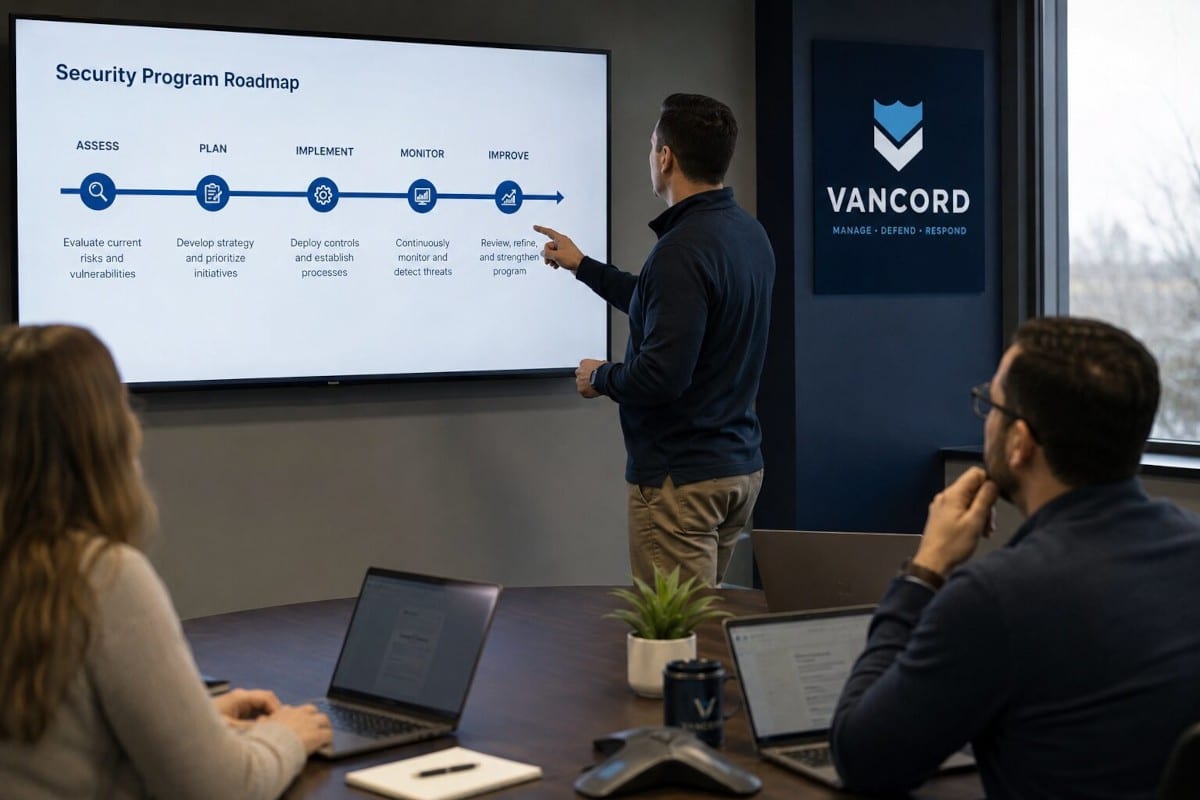
The results of a risk assessment are only valuable if they lead to action. A vISO facilitates the next steps by building a security roadmap, which translates assessment findings into achievable priorities based on criticality and available resources. Developed with efficiency in mind, they take into account an organization’s size, budget, and specific industry requirements. The best roadmaps are also realistic, measureable, and flexible enough to evolve as a business grows.
The Importance of Continuous Oversight
Once security priorities have been established, the focus of a vISO shifts to governance and turning strategy into daily operation.
This can include the implementation of:
- Documented policies and standards
- Repeatable processes and procedures
- Vendor Management
- Incident response planning
- Security awareness training
- Tabletop Exercises & Incident Response Testing
The ultimate goal is to build a security program that can be frequently tested before a security event occurs, and continuously improved as your business’s needs change.
Build a Security Program With Confidence
A mature, resilient security program is shaped by understanding all aspects of risk, as well as making informed decisions and steady improvement. A vISO provides the expertise, guidance, structure, and accountability necessary to make this happen.
If your organization is ready to understand its risks and build a security program that supports growth, start with a Request a Security Assessment and take the first step toward a more mature security foundation.