


When a cyberattack hits a manufacturer, the damage rarely stays inside a computer screen. Production lines stop. Shipping and receiving freeze. Workers get sent home while systems slowly come back online. Continuous monitoring exists to catch the quiet first moves of an attack long before it reaches the point where a factory has to shut its doors.
When IT Problems Become Production Problems
Most people picture a cyberattack as something that happens to data. On a factory floor, the bigger problem is usually what happens to everything connected to that data.
Production schedules, inventory systems, quality control applications, and shipping software all depend on technology working properly. When those systems go down, the physical work tied to them often stops too, even if no machine was directly attacked.
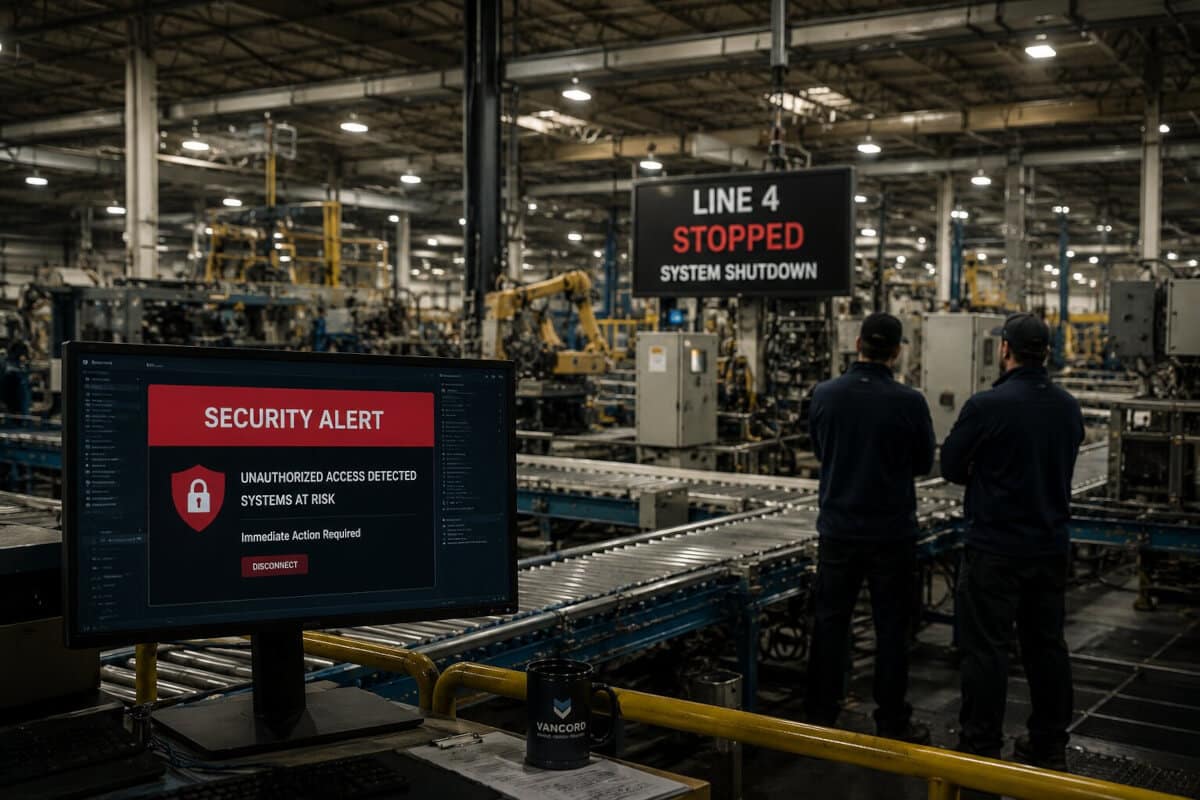
This is exactly why cyberattacks disrupt manufacturing operations so severely. Manufacturers depend on uptime more than almost any other industry. A few hours of downtime can mean missed deliveries, unhappy customers, and thousands of dollars in lost production.
According to IBM’s manufacturing research, unplanned downtime from a cyber incident can cost manufacturers as much as $125,000 per hour.
A Real Example From This Spring
West Pharmaceutical Services learned this lesson firsthand.
According to a filing with the U.S. Securities and Exchange Commission, the company detected unauthorized activity in May 2026 and proactively took parts of its network offline to contain the incident. The company later disclosed temporary disruptions to manufacturing, shipping, and receiving operations across multiple facilities.
The attackers never needed to touch a single production machine. They only had to impact the systems that told people what to build, where to ship it, and how to manage inventory.
Around the same time, Foxconn confirmed a separate cyberattack affecting several of its North American factories, including sites in Wisconsin and Texas. Employees at one location were sent home after widespread network and Wi-Fi outages. Timecard systems went down. Production paused while the company’s security team worked to contain the incident, and normal operations gradually resumed over the following days.
These incidents highlight something many smaller manufacturers miss. The attack surface is not only the machinery on the floor. It is the entire technology environment underneath it.
That is why manufacturers are increasingly investing in ICS security and OT protection to secure both business systems and production environments.
Why Manufacturing Is a Prime Target for Cyberattacks
Manufacturing has remained one of the most targeted industries for cybercrime for several years.
There are three reasons:
- Manufacturers rely heavily on uptime.
- Many facilities still use older technology.
- Supply chains create many potential entry points.
A manufacturer may have excellent security internally but still depend on vendors, suppliers, and remote contractors that create additional risk.
This broader pattern is exactly why Vancord recently explored in its blog post, “Why Manufacturing Companies Are Prime Ransomware Targets,” how attackers continue to focus on manufacturers that cannot afford extended downtime.
Why Continuous Monitoring Catches Attacks Earlier
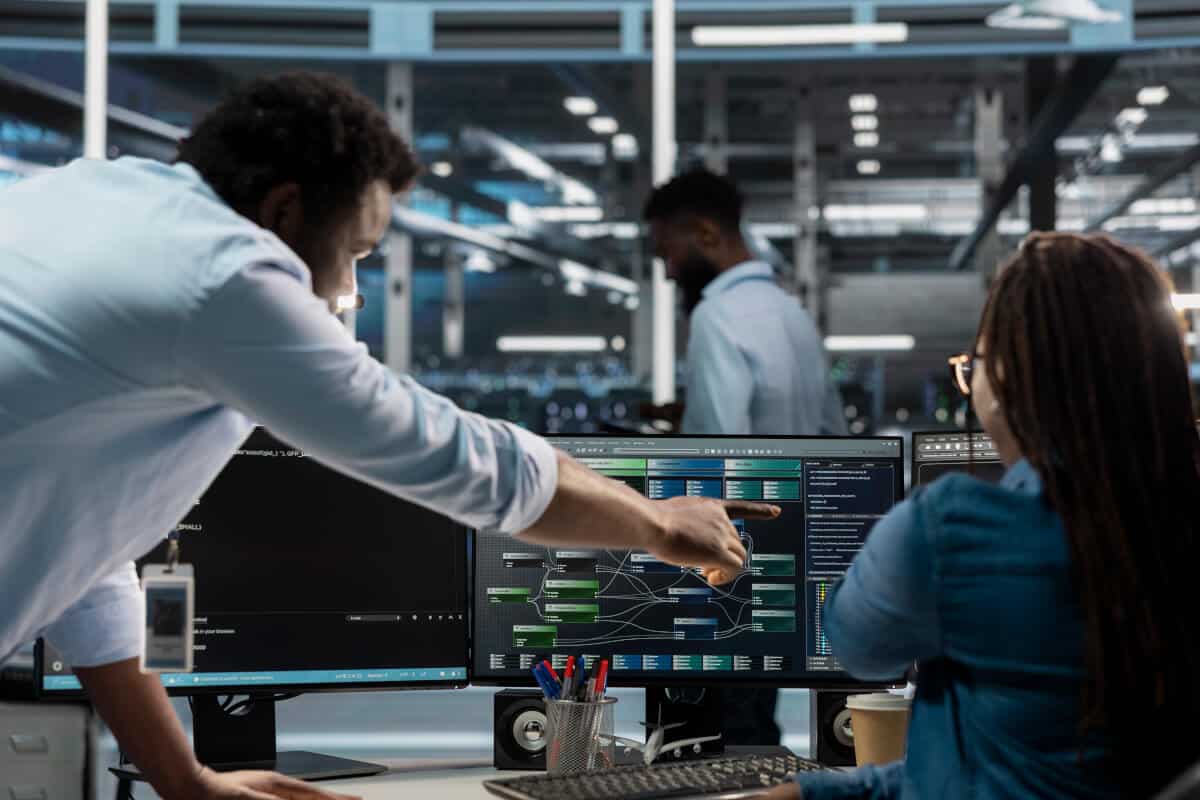
Here is the part that matters most for prevention. In several recent manufacturing incidents, attackers spent time inside the network quietly moving and copying data before any ransomware actually deployed. That window, between getting in and causing visible damage, is exactly where continuous monitoring earns its place. A 24/7 security operations center is built to notice the small, odd signals during that window: a login at 3 a.m. from a device nobody recognizes, an unusual amount of data suddenly leaving the network, or a single account accessing systems it has never touched before.
The cost of missing that window is steep. According to IBM’s research on the industrial sector, manufacturers take an average of 199 days to identify a breach and another 73 days to contain it.Vancord’s Managed detection and response exists to shrink that timeline from months down to hours.
If your team only finds out something is wrong once production has already stopped, that is a sign the gap between detection and disruption is wider than it should be. Vancord’s 24×7 managed services are built around closing exactly that gap, watching continuously instead of checking in once a day.
What Continuous Monitoring Actually Prevents
Continuous monitoring doesn’t promise that an attacker never gets in.
What it can prevent is the long period of unnoticed activity that often turns a small incident into a major outage.
Early detection helps organizations:
- Contain threats before ransomware spreads.
- Stop unauthorized access before data is stolen.
- Reduce downtime and recovery costs.
- Protect both IT and operational technology systems.
This approach works particularly well for manufacturers because production environments rarely shut down. Someone needs to be watching even when your internal team is asleep.
That is exactly why Vancord’s Managed Detection & Response (MDR) service exists, giving manufacturers 24/7 visibility and human analysts who can investigate suspicious activity before it turns into downtime.
The Financial Cost of Waiting Too Long
The direct costs of a cyberattack are only part of the story.
Manufacturers also deal with:
- Missed customer commitments.
- Overtime expenses.
- Production backlogs.
- Emergency recovery costs.
- Damaged customer trust.
For companies operating within larger supply chains, a single disruption can affect dozens of organizations downstream.
Vancord’s work in supply chain cybersecurity for manufacturers focuses heavily on reducing these ripple effects because one compromised manufacturer can create problems far beyond its own walls.
A Real Example of Taking a Proactive Approach
One of Vancord’s manufacturing case study highlights how a U.S. manufacturer gained a technology partner that understood the business well enough to plan ahead instead of constantly reacting to problems. Cybersecurity works the same way. The best time to improve monitoring is before an incident forces the conversation.
If you’re unsure how well your current environment would detect suspicious activity, a security GAP analysis can help identify weaknesses before they become operational disruptions.
Frequently Asked Questions
Can a cyberattack really stop a factory from operating?
Yes, and it often happens without the attackers ever touching production equipment directly. Locking down the IT systems that manage scheduling, shipping, and inventory is usually enough to halt physical operations.
Why is manufacturing targeted by ransomware?
Manufacturers depend heavily on uptime and often cannot tolerate extended outages. Attackers know this and use operational pressure to increase the likelihood of payment.
What is continuous monitoring in manufacturing cybersecurity?
Continuous monitoring means security tools and analysts watch your environment around the clock to identify suspicious activity and respond quickly.
How fast can continuous monitoring catch a cyberattack in manufacturing?
A mature security operations center can identify suspicious activity within minutes. Without continuous monitoring, organizations sometimes take months to discover breaches.
What’s the difference between continuous monitoring and basic antivirus software?
Antivirus software looks for known malicious files on a single device. Continuous monitoring watches behavior across your entire network around the clock, which is what catches an attacker’s early movements before any malware even needs to run.
Small Warning Signs Become Big Problems
Most manufacturing cyberattacks do not begin with a dramatic shutdown. They begin with a small signal that nobody notices.
A strange login. A new device on the network. An employee account behaving differently than usual.
The gap between a contained incident and a full production stoppage often comes down to how quickly those signals are seen.
If you’re not sure what your current monitoring would actually detect, request a security assessment to understand where visibility gaps exist and what steps can strengthen your defenses before downtime becomes your next business interruption.